
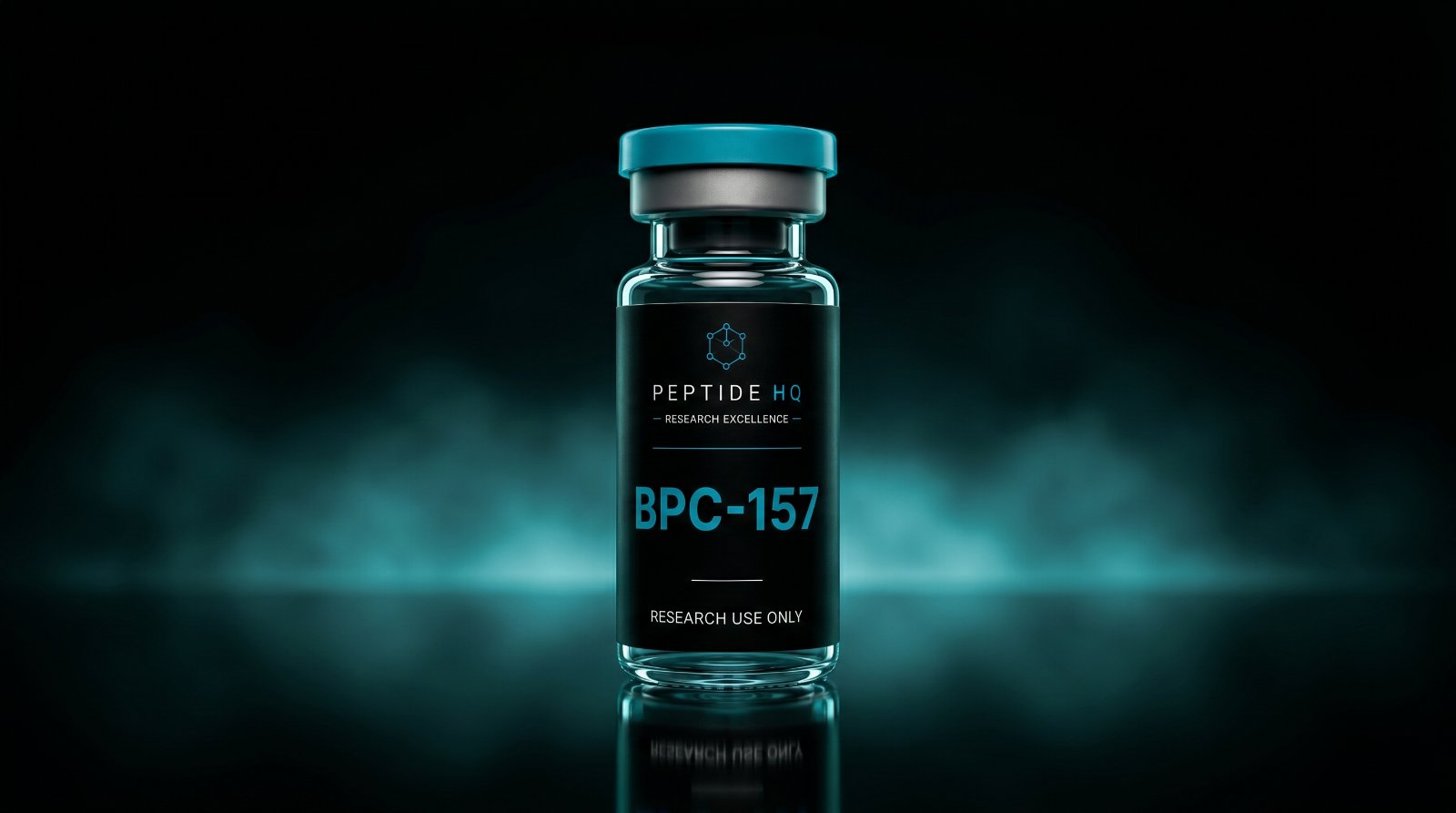
BPC-157 is among the most searched-for and most discussed peptides in the research world — and also one of the most misrepresented. This overview takes a research-first look: what the molecule is, the areas laboratories have explored, the honest state of the evidence, and the practical points that matter when sourcing it.
Important: BPC-157 discussed here is supplied strictly for laboratory and scientific research use only. It is not for human consumption, and nothing in this article is medical or usage advice.
What is BPC-157?
BPC-157 is a pentadecapeptide — a chain of 15 amino acids. Its sequence is derived from a region of a naturally occurring protein found in human gastric juice, referred to in the literature as BPC ("Body Protection Compound"). The synthetic fragment studied in laboratories is the portion designated 157, hence the name.
Key characteristics noted in the research literature:
- A 15-amino-acid synthetic peptide fragment (≈1.4 kDa)
- Derived from a gastric-juice protein sequence — a major reason so much of the early research focused on the gastrointestinal system
- Reported in research papers as notably stable compared with many peptides, including in gastric-environment models — a property that has itself been a subject of study
- Typically supplied for research as a lyophilised (freeze-dried) powder
What Has the Research Explored?
BPC-157 has generated a substantial body of published laboratory work spanning several decades. The major research themes include:
Gastrointestinal models. Reflecting its gastric origin, much of the foundational literature examines BPC-157 in experimental models of the GI tract — studies of the stomach, intestinal tissue, and gut-related injury models in laboratory animals.
Soft-tissue and musculoskeletal models. A widely cited strand of research has examined BPC-157 in animal models involving tendon, ligament, and muscle tissue — including studies of tendon-to-bone healing models and fibroblast behaviour in vitro.
Vascular and angiogenesis research. Laboratory studies have investigated BPC-157 in relation to blood-vessel formation and the nitric-oxide system in experimental models.
Organ-protection models. Various animal studies have explored the peptide in models of injury to the liver, pancreas, and other organs.
The Honest State of the Evidence
This is where a responsible research supplier should be direct, so we will be: the BPC-157 literature is overwhelmingly preclinical. The published evidence base consists almost entirely of laboratory and animal studies. Robust human clinical data is essentially absent from the peer-reviewed record, and a large proportion of the existing studies originate from a small number of research groups — a point critics of the literature regularly raise, and a fair one.
None of this makes the molecule uninteresting — it remains one of the most actively discussed peptides in research — but it is exactly why BPC-157 is a research compound: an object of ongoing scientific investigation, not an established agent. Researchers should treat bold claims about BPC-157 (which are common online) with appropriate scepticism, and so should anyone evaluating suppliers who make them.
Regulatory Context Researchers Should Know
BPC-157 has attracted regulatory attention internationally. In the United States, the FDA has placed BPC-157 in a category of substances that raise significant safety concerns for use in compounding — one reason the compound's status differs across markets. In the UK, BPC-157 is not a licensed medicine and is supplied lawfully only as a research chemical, for laboratory use, never for human consumption. Reputable suppliers are explicit about this; suppliers implying otherwise are advertising their own non-compliance.
What Researchers Should Check When Sourcing BPC-157
Because BPC-157 is so heavily searched, it is also heavily — and variably — supplied. The quality checks are the same as for any research peptide, covered fully in our guide to choosing a UK research peptide supplier:
- Batch-specific Certificate of Analysis — identity and purity documented for the batch actually supplied
- Independent third-party testing — purity by HPLC, identity confirmed by mass spectrometry
- Correct form and storage — lyophilised powder, stored under temperature-controlled conditions
- A verifiable, registered company — with transparent research-use-only practices and no medical claims
BPC-157 at Peptide HQ
Peptide HQ supplies BPC-157 for laboratory research use only. Batch Certificates of Analysis are published on our site, with purity independently verified by a third-party laboratory using HPLC and mass spectrometry, and all peptides stored under temperature-controlled conditions.
You can find BPC-157 alongside related research compounds in our Tissue Repair research category.
All products are for laboratory research use only and are not for human consumption.